From speech recognition to translation — how SeoHee closes the gaps in interpreting
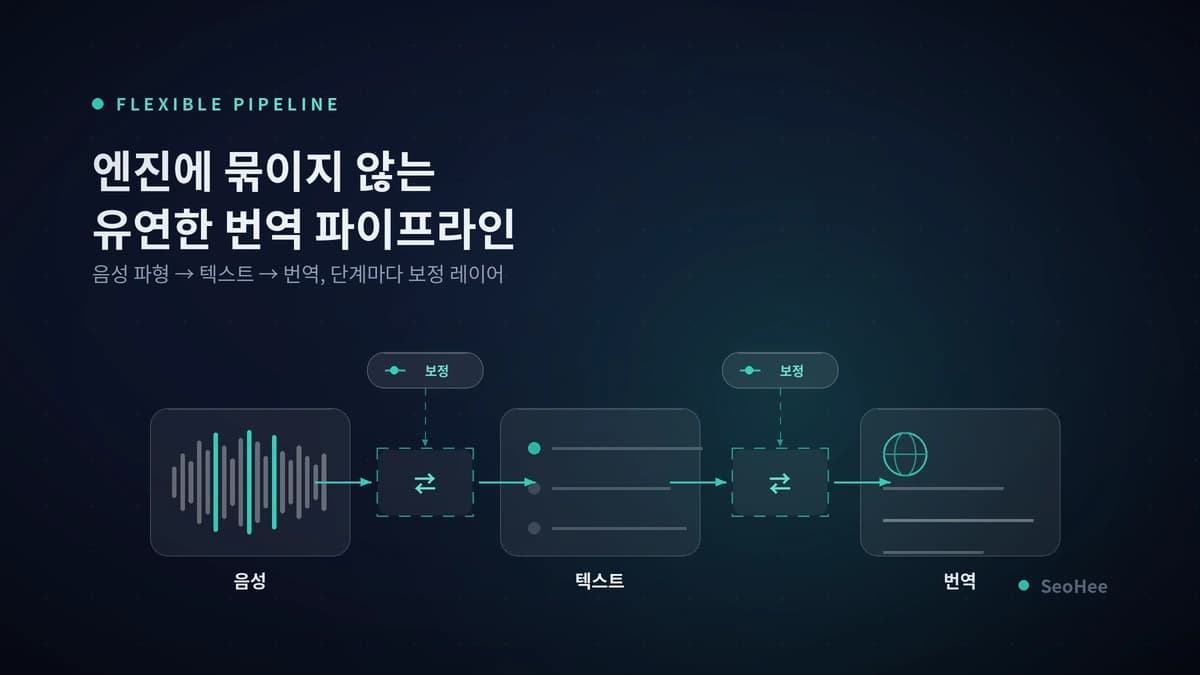
Interpreting looks like it happens in one step, but it actually goes through two conversions. First the customer's speech becomes text (speech recognition), then that text is carried over into another language (translation). A gap can open at either stage, and SeoHee closes each one a different way.
The first gate is speech recognition. Surprisingly, this is often where things first go wrong. In a noisy store, with fast speech or unfamiliar pronunciation, the step that turns sound into text wobbles. If the input is off, even the best translation that follows comes out wrong. SeoHee corrects for the words and pronunciations a store hears often, so it captures speech correctly from the start, even at a noisy counter.
The second gate is translation. A general engine handles ordinary sentences well, but it often stumbles on words that need context — brand names, ingredient names, industry terms. SeoHee fixes these words in advance through a store glossary, keeping the engine from drifting the wrong way.
There's one more thing: SeoHee doesn't rely on a single translation engine. Engines differ in the languages and fields they handle well, and because SeoHee can choose the engine that fits a store's setting, it isn't bound wholesale to any one engine's weakness. When a better engine or a new language appears, it can take them on without major rework.
Good interpreting isn't a single act of magic; it comes from holding up both the hearing stage and the carrying-over stage. SeoHee acknowledges the limits of each, then lays a store's reality on top to keep accuracy where it matters.