
News
X-IoT News
Product launches, certifications, and event announcements.
Notices
X-IoT News
 Notice
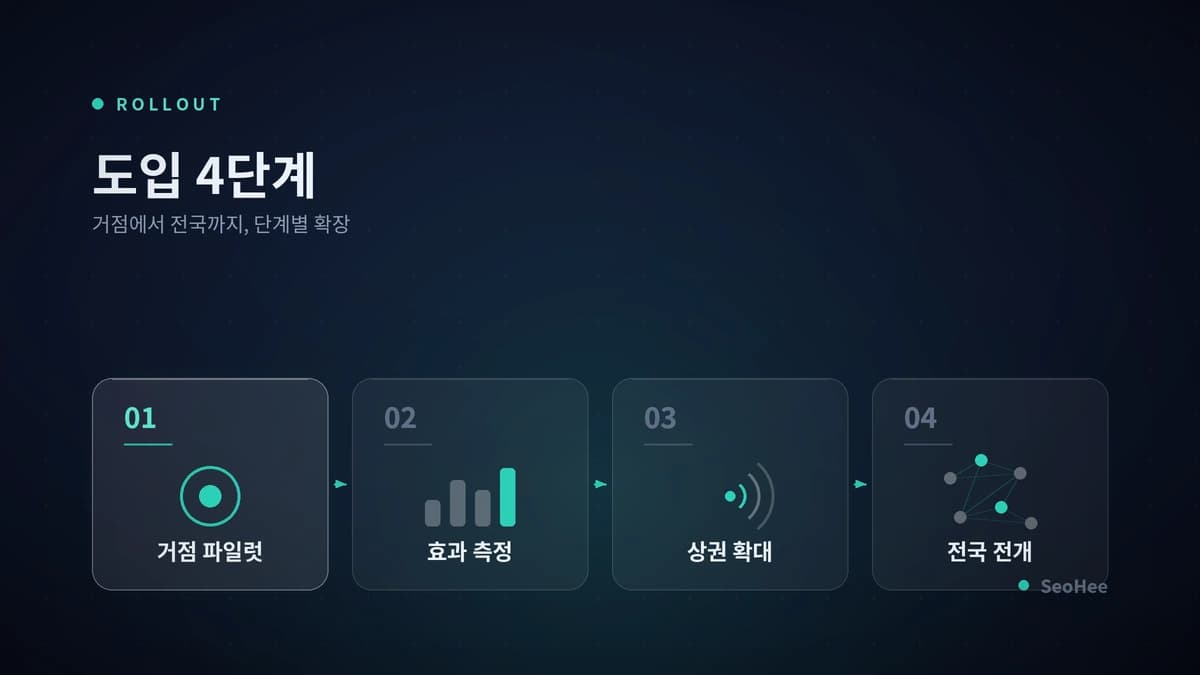
Prove it small, then go nationwide — four steps to adopting store interpreting
Rolling a new service out to every store at once is daunting. SeoHee doesn't recommend a full rollout from the start. It suggests a step-by-step approach: confirm it small, see that it works, then widen. The first step is a flagship pilot. You run a trial first at one or two stores with a high share of foreign customers. You build a glossary suited to that line of business, and training the staff takes no more than an hour. The second is measuring the effect. You confirm the number of foreign customers served, dwell time, purchase conversion, and customer satisfaction as data, and pull it together in a monthly report. You judge the effect by numbers, not by feel. The third is expanding by district. Based on the results proven in the pilot, you widen to stores in districts with many foreign customers. The last is the nationwide rollout. You manage every store from one screen through the headquarters dashboard and expand gradually. A flow that began at a single trial store carries naturally to all of them. The SeoHee team is with you at every step of adoption, so the store can simply greet its customers as always.
 Notice
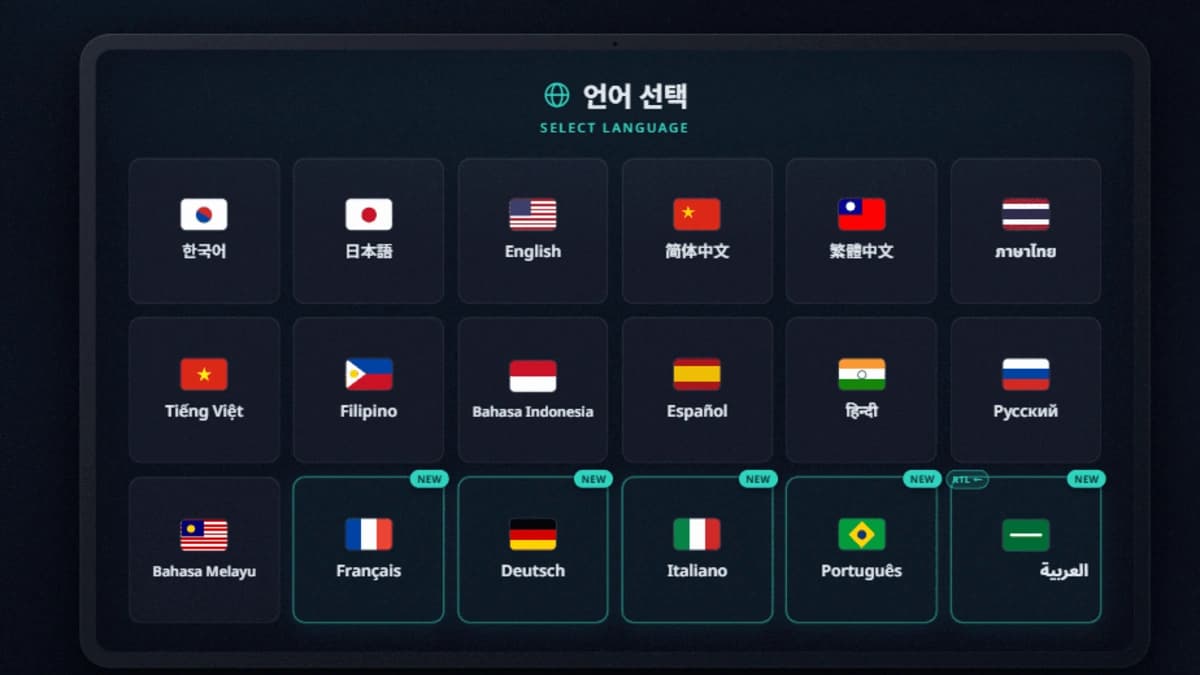
SeoHee expands to 18 supported languages — adding European languages and Arabic
SeoHee, the in-store AI interpretation service, has expanded its supported languages from 13 to 18. French, German, Italian, Portuguese, and Arabic have been added, so customers from Europe and the Middle East can now be served in their own languages. According to the Korea Tourism Organization's April 2026 figures, the top 12 source countries for visitors to Korea — about 82% of the total — all fall within languages SeoHee can serve in the customer's own tongue. With this addition of European languages and Arabic, customers from Europe and the Middle East, previously harder to serve, can now be welcomed in their native languages too. This expansion delivers on a plan announced earlier. SeoHee had previously shared plans to add French, Portuguese, and Arabic; German and Italian now join them, bringing major European languages together with Arabic. Arabic in particular is supported with right-to-left (RTL) text direction adapted to the screen. The new languages come with SeoHee's core features intact — speech recognition, translation, and on-screen display. At the counter, a single tablet converts a customer's speech into Korean in real time on the staff's screen, and image translation lets a customer photograph a Korean menu and see it in their chosen language. Register your store's menu in advance, and customers can view it in their own language instantly via QR code. Specialized terms that differ by industry are handled through a per-store glossary. Even as languages grow, there is nothing extra for the store to do — a glossary you have already registered is applied automatically to the newly added languages. One thing SeoHee pays close attention to is that the conditions for clear recognition differ from language to language. Because a single speech-recognition engine does not handle every language equally well, SeoHee decides which engine suits each language based on its own measurements, and processes each language with the better-performing engine. SeoHee is currently preparing field validation (a pilot) in real store environments — refining the service beyond controlled measurements, amid the noise of a real store and the words of real customers. If you'd like to bring in-store interpretation to your business, request a free consultation on our contact page. https://x-iot.co.kr/contact?topic=seohee
 Notice
Turning the end of a conversation into action — SeoHee's review and coupon link
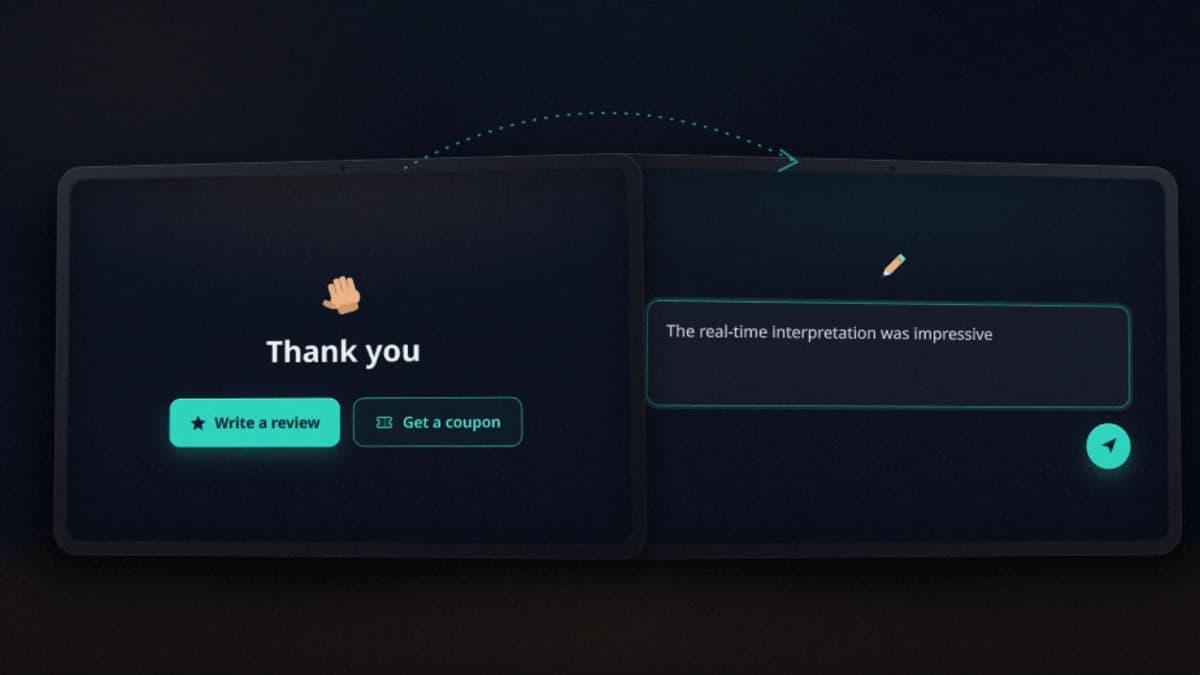
The moment a conversation with a foreign customer ends well is also the moment that customer is most satisfied. Usually you simply say goodbye and that's that — but SeoHee makes one more use of that moment. When the conversation wraps up, the screen turns to a farewell in the customer's own language. On that goodbye screen, "Write a review" and "Get a coupon" buttons appear side by side, and a tap takes the customer straight to the review page or coupon page the store has set — so they can leave a review of the good experience they just had, or claim a coupon, right on the spot. 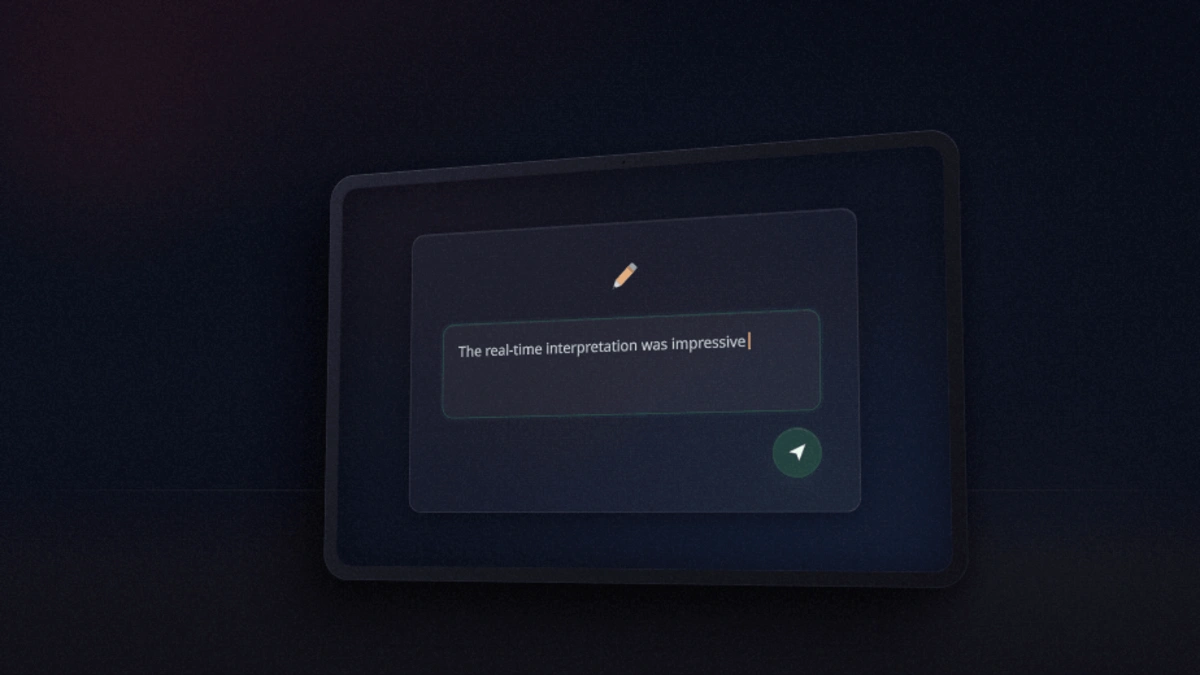 A review is an asset in itself. Reviews piling up in several languages become multilingual content that reaches the next foreign customer through online stores, social media, and search. A coupon calls the next visit. A coupon received in one's own language easily leads to a repeat purchase or an online sign-up, and because it connects straight through a QR code or link, the customer never has to go hunting for it. A single conversation at the offline counter, closing into an online review and a return visit. SeoHee carries an encounter that began with interpreting through to the store's next one.
 Notice
One headquarters, every store on one screen — SeoHee's chain management
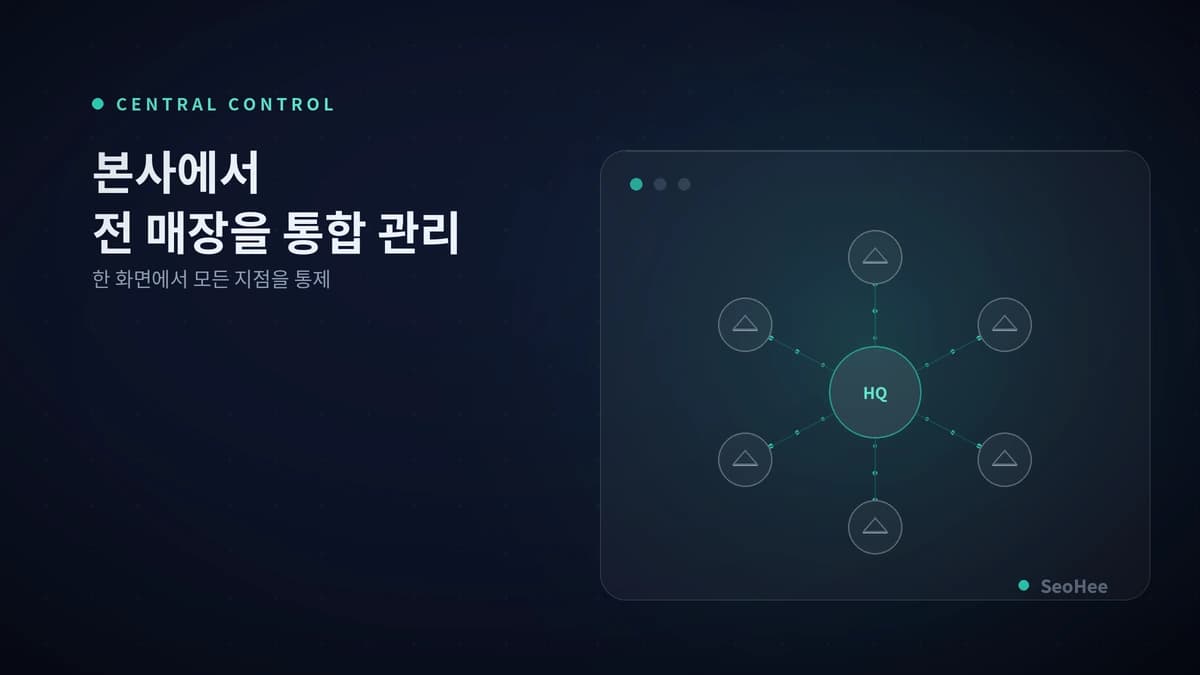
When there's only one store, an interpreting service is simple. But once you have ten stores, or a hundred, it's a different story. Does each store build its own glossary? Who manages the language settings? How does headquarters know which store uses it, and how much? SeoHee was designed from the start for organizations that run many stores. It has a chain of permissions running from headquarters down to the individual employee, so those at the top see everything while those below handle only their own part. Headquarters, as the top-level administrator, controls every store's glossary, language settings, and usage from a single screen. Register a new ingredient or brand term once, and it can be applied to the designated stores all at once. Each store sees only its own data. A multi-tenant structure keeps store data isolated from one another, so one store's records never bleed into another's. Because of this, you don't have to set the service up from scratch every time you add a store. Issue an account and an access QR code, and the new store joins right away and shows up on the headquarters dashboard. Chain or franchise, SeoHee maps onto that organizational structure with no extra development.
 Notice
From speech recognition to translation — how SeoHee closes the gaps in interpreting
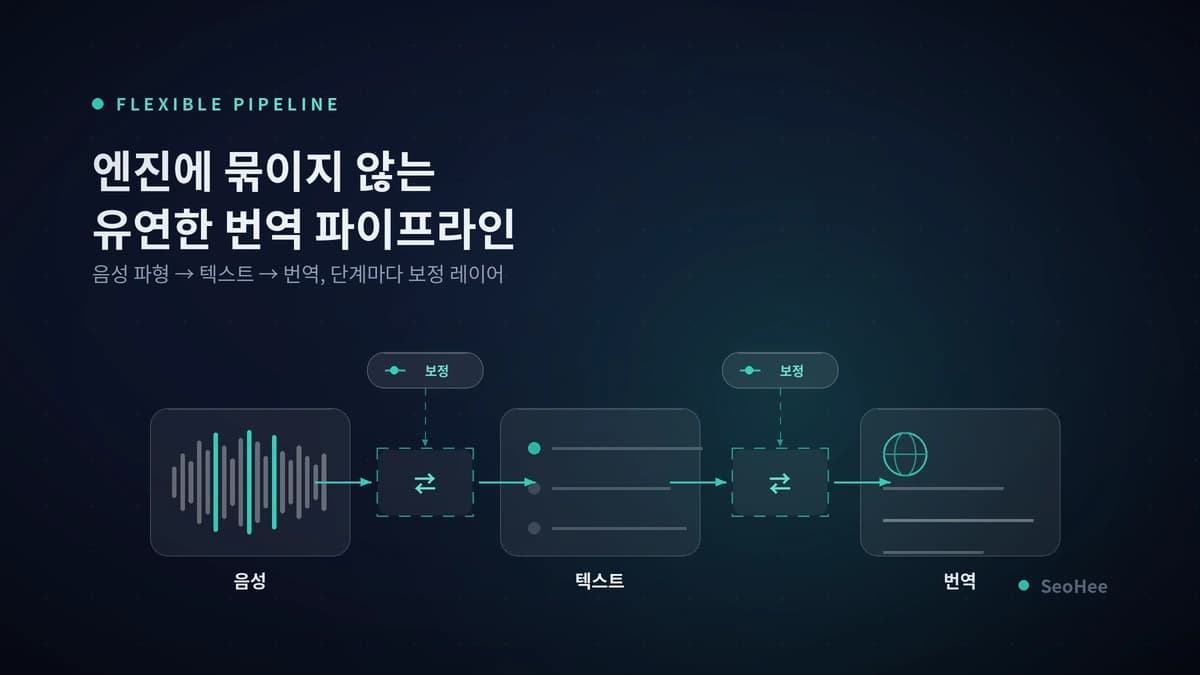
Interpreting looks like it happens in one step, but it actually goes through two conversions. First the customer's speech becomes text (speech recognition), then that text is carried over into another language (translation). A gap can open at either stage, and SeoHee closes each one a different way. The first gate is speech recognition. Surprisingly, this is often where things first go wrong. In a noisy store, with fast speech or unfamiliar pronunciation, the step that turns sound into text wobbles. If the input is off, even the best translation that follows comes out wrong. SeoHee corrects for the words and pronunciations a store hears often, so it captures speech correctly from the start, even at a noisy counter. The second gate is translation. A general engine handles ordinary sentences well, but it often stumbles on words that need context — brand names, ingredient names, industry terms. SeoHee fixes these words in advance through a store glossary, keeping the engine from drifting the wrong way. There's one more thing: SeoHee doesn't rely on a single translation engine. Engines differ in the languages and fields they handle well, and because SeoHee can choose the engine that fits a store's setting, it isn't bound wholesale to any one engine's weakness. When a better engine or a new language appears, it can take them on without major rework. Good interpreting isn't a single act of magic; it comes from holding up both the hearing stage and the carrying-over stage. SeoHee acknowledges the limits of each, then lays a store's reality on top to keep accuracy where it matters.
 Notice
When a store's conversations become data — the first customer signal SeoHee leaves behind
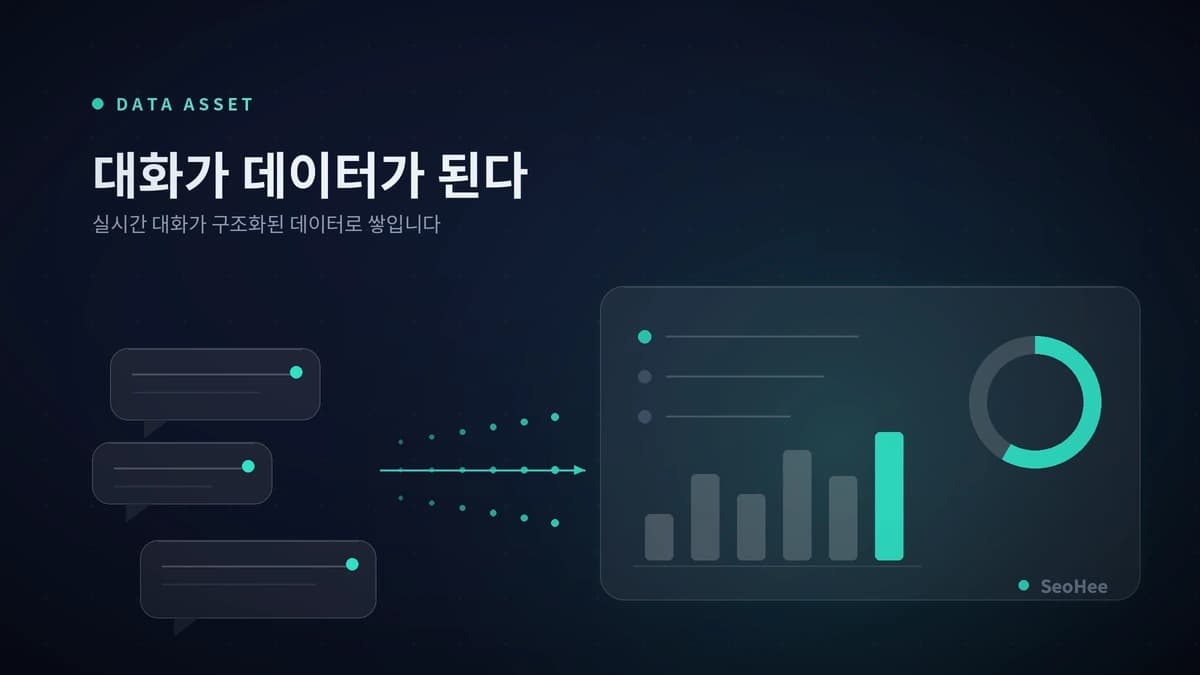
The conversations a store has with foreign customers all day usually vanish the moment each one ends. What customers wanted to know, which ingredients and brands they asked about most — signals that sit closest to sales, yet nothing is kept. SeoHee interprets and, at the same time, keeps those conversations as the store's own asset. What was said and how it was translated builds up as a record, and a few things sort themselves out on top of it. First, the language mix. Which languages your customers speak, and how often, is tallied per store. Not a vague "we get a lot of foreigners," but a concrete picture — "this store handles Vietnamese the most." Next, what gets asked. Among the ingredient, brand, and product names in the glossary, you can see which words actually came up most in conversation. Which products draw foreign customers' interest becomes clear without anyone counting by hand. There's a sense of momentum, too. Words that have spiked lately surface as "trending keywords," so you can read early where interest is gathering — which products, which ingredients. When deciding what to stock or display, you can look first at an interest signal that surveys and POS don't catch yet. What matters here is that this data does not identify individuals. It deals with what was exchanged and how much — not who said it — in a de-identified, aggregated form, and ownership and control of the data stay with the store. SeoHee doesn't stop at interpreting. A store's counter conversations no longer disappearing, but staying as the store's data — that is another kind of value SeoHee sets out to build.
- Notice
Before "Gwang-eo" Becomes "Crazy Talk" — Two Stages Where SeoHee Protects Interpretation Accuracy
A customer orders "gwang-eo" (광어, flatfish), and the screen shows "crazy talk." A request for "dae-bang-eo" (대방어, large yellowtail) comes out as "Large-Scale Defense." In Korean, the word for that flatfish sounds identical to 狂語 ("mad words"), and "bang-eo" the fish is a homophone of "bang-eo" meaning "defense." A translator that doesn't understand context easily picks the wrong one. It may be good for a laugh in the shop, but to a foreign customer it's simply "a menu that makes no sense." Food names and industry-specific terms are exactly where general translators fail most often. So interpretation accuracy isn't decided by translation skill — it's decided before translation even begins. SeoHee protects accuracy in two stages, in the order interpretation actually happens. The first stage is source-text correction. Interpretation runs in sequence: the customer's speech is turned into text (speech recognition), and that text is translated. If the first step — recognition — is wrong, everything after it is wrong too, no matter how polished the translation; it only faithfully translates a misheard sentence. Stores aren't quiet: kitchen noise, dialects, and fast speech all lead to misrecognition. So SeoHee lets a person correct the recognized text. As misrecognitions accumulate, the operator — who knows the store best — reviews the log and fixes them. Once corrected, the fix is applied to every interaction that follows, so the same mistake doesn't recur. Because a human decides and the system carries it forward — a semi-automatic approach — accuracy is tuned to your store the more customers you serve. The second stage is glossary matching. Once the source text is clean, SeoHee checks it against your store's own glossary just before translating. Register the words you use often, once, and SeoHee always renders them the same way. You can lock "gwang-eo" to "ヒラメ" and "dae-bang-eo" to "大ブリ" — the precise term for your trade — and mark brand names or signature menu items to stay in the original, untranslated. A glossary you build once applies automatically, with no need to re-enter terms language by language. Add a language, and there's nothing more for the store to do. Source-text correction and the glossary come together with SeoHee's real-time interpretation and image translation, all in one platform. They're available as part of a plan that fits your store's size and the way you operate. If you're interested in adopting in-store interpretation, request a free consultation on our contact page. https://x-iot.co.kr/contact?topic=seohee #StoreInterpretation #Glossary #AITranslation #RealTimeInterpretation #ForeignCustomers #MenuTranslation #Mistranslation #SeoHee #XIoT
- Notice
Good Interpretation Starts with Good Hardware — The SeoHee Dedicated Tablet Is Coming
When adopting an in-store interpretation service, there are three hardware paths to consider. First, kiosks are overkill. Dedicated kiosks cost thousands of dollars, require floor space, and carry ongoing maintenance burdens — an excessive investment for a single function like interpretation. Second, your existing tablet is enough to get started. SeoHee is designed to launch without any new equipment. Open SeoHee on a tablet you already own, place the customer QR code on the counter, and you are operating that same day. This is the entry configuration, built to keep the barrier as low as possible. But interpretation quality depends on hardware. Stores are not quiet places. Kitchen noise, background music, and conversations at the next table all compete with the customer's voice — and speech recognition accuracy hinges on microphone performance. General-purpose tablets also behave in ways unsuited to store operation: customers wander into other apps, screens turn off mid-service. That is why X-IoT has built a dedicated SeoHee tablet. An external directional microphone isolates the customer's voice clearly even in noisy store environments. Display lock, power control, and external device connectivity are customized at the OS level for store operation, so the tablet always stays at its post as your interpreter. And the pricing is reasonable — at a level that simply does not compare to kiosks, making adoption easy on the budget. X-IoT is a hardware specialist that has supplied touch screens from 2 to 55 inches. This is why SeoHee can optimize software and hardware together. Designing the exact device a service needs — that is what a hardware-based AI solutions company does best. The dedicated tablet is in the final stage of optimization testing and will be available soon. If you are considering adoption, leave us an inquiry and we will notify you first when supply begins. https://x-iot.co.kr/contact?topic=seohee
- Notice
How to Create a Foreign-Language Menu — A Guide to Three Approaches
With more international customers visiting Korean stores, many owners are wondering how to offer menus in foreign languages. There are three main approaches, each with its own trade-offs. The first is professional translation services. Hiring a translation agency guarantees human-reviewed quality, but involves per-language translation fees, design and printing costs, and production time. The biggest burden is maintenance: every menu change or price update means a new order and a new print run. For stores with seasonal menus, these costs repeat indefinitely. The second is free machine translation tools. Translating menu items yourself with a translation app costs nothing, but food names are where general-purpose translators fail most often. Unique dish names and store-specific expressions lack context for the machine, often producing translations that confuse customers more than they help. The third is AI image translation, which uses the menu you already have. Photograph your existing Korean menu with a smartphone, and the translation appears directly over the original image. SeoHee, the in-store AI interpretation service, supports this through its image translation feature. There are no production costs or lead time: one photo of your menu converts into 13 languages. A store-specific glossary ensures your unique dish names are translated correctly, and when the menu changes, you simply take a new photo. International customers scan the QR code at your store to view the menu in their own language. Which approach is right for you? If your menu rarely changes and you can invest in translation quality, professional services are a solid choice. But if your menu changes often, you need multiple languages at once, or you want to start right away, AI image translation wins on both cost and time. SeoHee provides menu image translation and real-time conversation interpretation in 13 languages. If you are interested in adopting in-store interpretation, request a free consultation on our contact page. https://x-iot.co.kr/contact?topic=seohee
- Notice
SeoHee expands to 13 languages — now covering 97% of foreign tourists in Korea
SeoHee, the in-store AI interpretation service, has expanded its supported languages from 8 to 13. With the addition of Spanish, Filipino, Hindi, Russian, and Malay, approximately 97% of foreign tourists visiting Korea can now be served in their native language. In 2025, visitors to Korea came from increasingly diverse origins — China (5.48M), Japan (3.65M), Taiwan (1.89M), the US (1.48M), as well as the Philippines (~400K), Malaysia (~200K), Russia (~150K), and India (~100K). The previous 8 languages covered roughly 85–90%, but this expansion raises coverage to approximately 97%. Spanish, spoken by 550 million people worldwide, directly addresses the growing number of K-culture visitors from Latin America. All five new languages support the full pipeline: speech recognition, translation, and voice output. A single tablet at the store counter enables real-time two-way voice translation in 13 languages. Image translation — where a smartphone photo of a Korean menu is instantly translated into the selected language — also works across all 13 languages. Stores that pre-register their menus can offer a QR code for customers to browse in their native language. Industry-specific terminology is handled through per-store glossaries. For example, at a seafood market, "gwangeo" translates precisely to "ヒラメ" in Japanese. Proprietary menu names and brand terms can be preserved untranslated. Adding languages requires no extra effort from stores — existing glossaries apply automatically to all 13 languages. SeoHee plans to add French, Portuguese, Arabic, and more, targeting 16 languages to cover approximately 99% of all foreign visitors to Korea. For in-store interpretation, request a free consultation on our contact page. https://x-iot.co.kr/contact?topic=seohee #MultilingualMenu #StoreInterpretation #AITranslation #RealtimeInterpretation #SeoHee #ForeignTourists #13Languages
 Notice
SeoHee launches image translation — Photograph your menu for instant 7-language translation
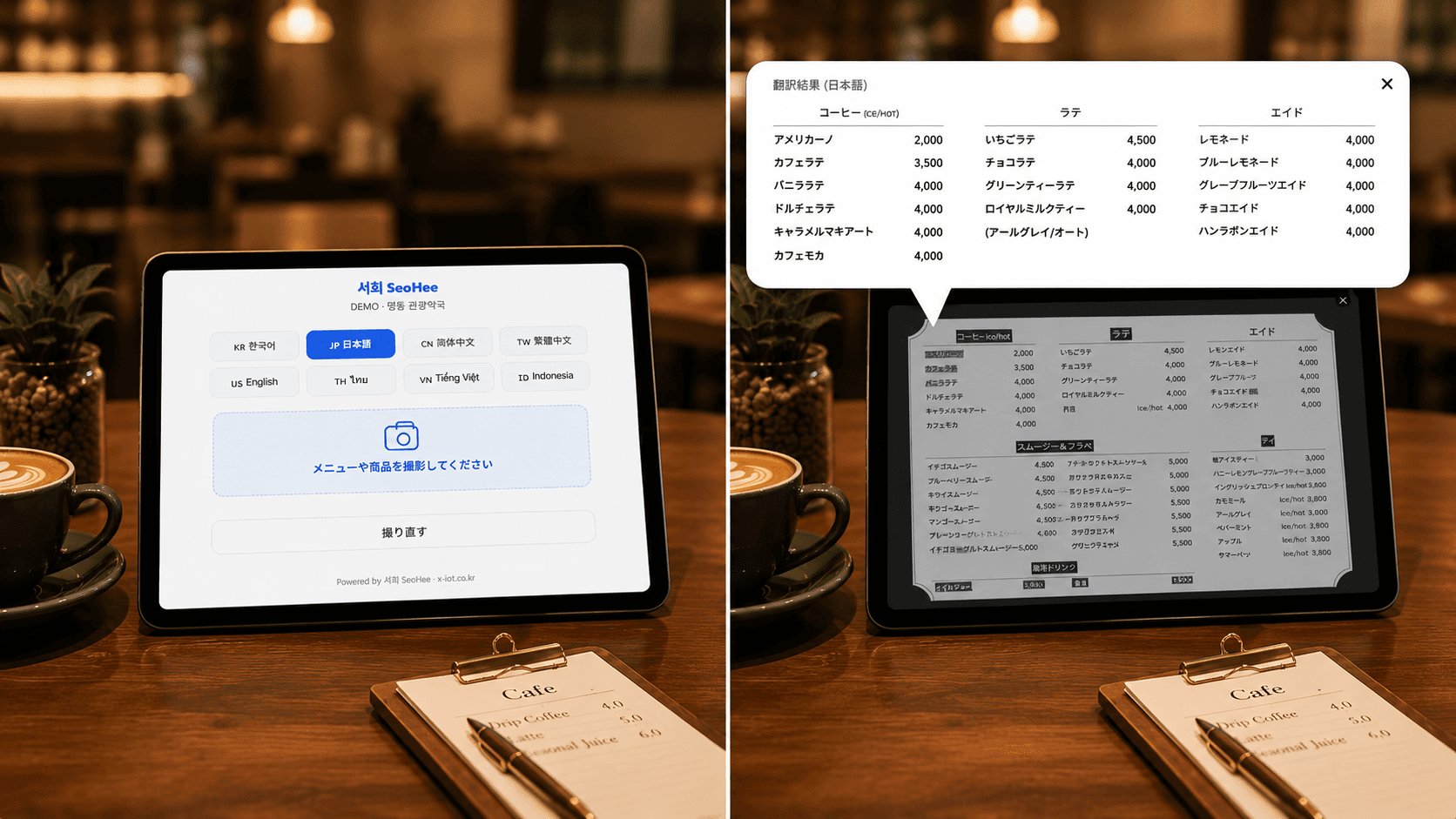
No more creating separate foreign-language menus. SeoHee, the in-store AI interpretation service, now includes image translation. Simply photograph your existing Korean menu with a smartphone, and the translation appears overlaid on the original image. Seven languages are supported: Japanese, English, Simplified Chinese, Traditional Chinese, Thai, Vietnamese, and Indonesian. It is the fastest way to solve the question "How do I get my menu in English?" No multilingual menu production costs, no design outsourcing lead time. One photo of your existing Korean menu is all you need. The process is simple. When you adopt SeoHee, you receive a dedicated QR code for your store. Place it on the counter or table, and foreign customers can scan it, photograph the menu themselves, and view it in their own language. Staff can also snap a photo directly from the SeoHee dashboard with a single tap. It works as easily as a QR-code menu — no app installation required. Ideal for restaurants, cafes, and tourist-area shops that have struggled with serving foreign customers. Beyond menus, it works with any text-bearing image — store notices, precautions, and price lists — broadening the scope of in-store translation. The glossary feature preserves proprietary menu names and brand terms without AI translation. Image translation is provided alongside SeoHee's existing real-time voice interpretation and pre-translated menu delivery, all within a single platform. Stores already using SeoHee can start immediately at no additional cost. If you are interested in in-store interpretation, request a free consultation on our contact page. https://x-iot.co.kr/contact?topic=seohee #ForeignLanguageMenu #MultilingualMenu #EnglishMenu #JapaneseMenu #ChineseMenu #QRCodeMenu #StoreInterpretation #AITranslation #RealtimeInterpretation #SeoHee
- Notice
X-IoT Launches 'Seohee' — AI Store Translation Solution
X-IoT has launched Seohee, our first solution combining AI with our IoT expertise. Seohee is a counter-top interpreter that converts customers' words into the language of your store in under one second. It supports 8 languages — Japanese, Korean, English, Chinese (Simplified/Traditional), Thai, Vietnamese, and Indonesian — with store-specific glossaries for industry-level accuracy. We are currently offering a 1-month free pilot program. Experience Seohee in your actual store environment and decide on adoption at your own pace. For details, visit [https://seohee.x-iot.co.kr](https://seohee.x-iot.co.kr) or contact us through our inquiry page.
- Notice
Welcome to the redesigned X-IoT website
The X-IoT website has been fully redesigned through the Genesis project.